

What is the internet we want? This was a question posed by one of the panels at the 7th African Internet Governance Forum (AfIGF), held from the 4-6 November 2018 in Khartoum, Sudan. The question is increasingly important as the development of cybercrimes and cybersecurity legislation becomes a priority for many African governments. The 2014 African Union Convention on Cyberspace Security and Protection of Personal Data or “Malabo Convention” represents political commitment by African states to take measures on a range of issues, including cybercrime. While ratification of the convention… Read more
Blog

In 2014, the African Union Commission (AUC) adopted the Malabo Convention on Cyber Security and Personal Data Protection in order to provide fundamental principles and guidelines, ensure the effective protection of personal data and create a safe digital environment for citizens as well as protect individuals’ online data and privacy.
However, unlike the European Union’s (EU) General Data Protection Regulation (GDPR), the African Union (AU) Convention is not automatically… Read more

Africa’s quest to counter fake news, which could also be described as a “fear of criticism”, has become increasingly problematic in light of the recent creation of vague laws to address this challenge. The big men of Africa are absolutely terrified of criticism and now, more than ever, they are being hit with the epiphany of how powerful a weapon the internet is. Citizens no longer have to march through the streets to strike against what they deem unfair; they have a collective voice through the internet. With the current revolution taking place on Twitter, through hashtags and the like,… Read more

Something historic happened by the Nile earlier this month. From 4-6 November 2018, at Corinthia Hotel Khartoum by the banks of that gargantuan and historic river which traverses the African continent, stakeholders from across the continent and the world gathered to participate in the African Internet Governance Forum (AfIGF).
The setting of the AfIGF by the Nile was perhaps figurative. As a colleague mentioned to me, ‘’Oh, you attended the AfIGF by that very contentious river.” By that, he was referring to plans by several nations upstream the Nile to dam it, for purposes… Read more

There is a wave of cybersecurity and data protection regulations being introduced in a number of African countries. Some countries have already enacted these internet laws, while others are in the process of introducing the regulations.
Notably, the introduction of cybersecurity and data protection laws in these African jurisdictions has caused consternation, contestation and debate regarding the process of law enactment and the fact that some clauses or terminologies are understood to be vague. It has also been noted with trepidation that the penalties contained in these cyber… Read more
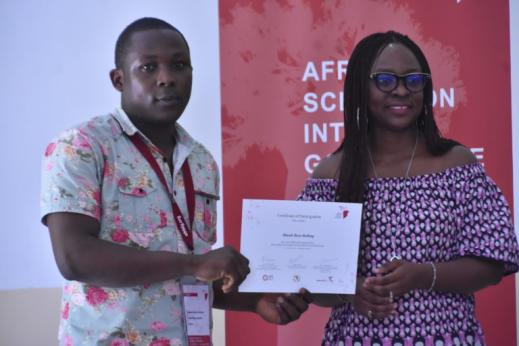
The sixth African School on Internet Governance (AfriSIG), organised by the Association for Progressive Communications (APC) and the African Union Commission (AUC), was attended by 35 fellows and 26 faculty members from different countries who came together for five days to brainstorm, teach, learn, network, dialogue and exchange ideas about issues related to internet governance on a global, regional and local level.
When I got the mail from the AfriSIG organisers confirming that my application was successful, I was super excited. I started packing my bag a week prior to the school.… Read more
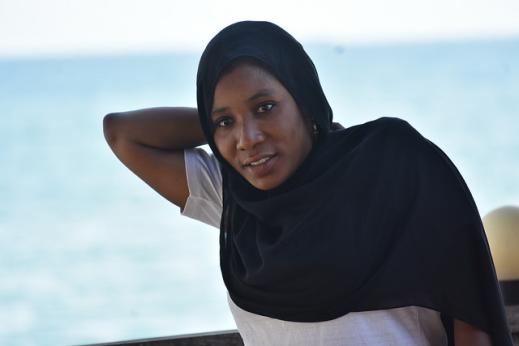
My interest in internet governance issues was sparked when I coordinated a project on internet access for women in northern Nigeria in 2016 with the ultimate goal of bridging gender digital exclusion and promoting greater access to the use and benefits of internet to women.
Following this experience, I began to apply to participate in internet governance forum events. Initially, I had little success, but my dream eventually came to fruition in August 2018 when I received an invitation to the 2018 African School on Internet Governance (AfriSIG). When I first heard about AfriSIG, I was… Read more
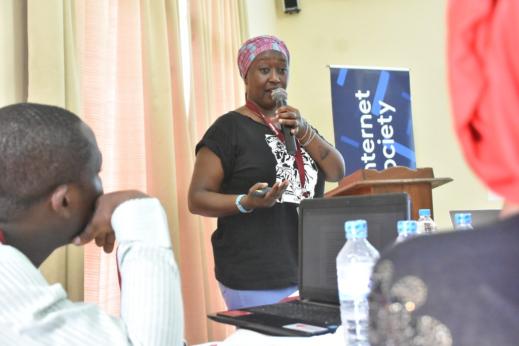
No matter how many times I sit in a space that is reflecting on, learning from or critiquing issues around gender, I am always both pleased and flummoxed by the range of perspectives in the room, with some people gasping at the idea that gender is and always has been a spectrum and other people strongly affirming the importance of LGBTIQA inclusion in all spaces including, in this case, on the internet.
APC invited me to participate in this year’s African School on Internet Governance (AfriSIG), which took place in Zanzibar, less than 100 metres from the warm waters of the Indian… Read more

I have wanted to attend the African School on Internet Governance (AfriSIG) ever since I participated in the Internet Governance Forum (IGF) as an ISOCYouth@IGF fellow last year. It was through this formative experience that I first developed a passion for internet governance. Even with my limited background in the field, I decided to organise the Arusha Women School of Internet Governance (AruWSIG) and the Tanzania School of Internet Governance (TzSIG) with the hopes of sharing my newfound knowledge with my community.
When I received confirmation of my acceptance to AfriSIG, I… Read more
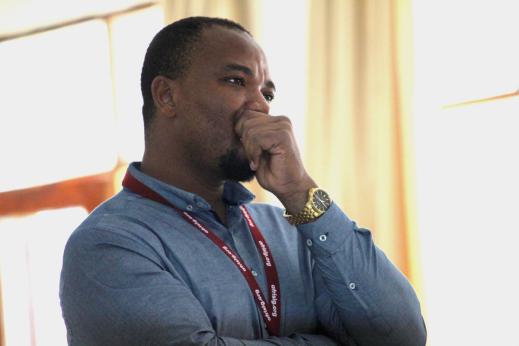
Sur l’art de la négociation par Larry Strickling. Lary S. est un négociateur fin, ayant travaillé sous l’administration de Barack Obama. Cette année, l’école sur la gouvernance de l’internet en Afrique a eu l’honneur les 10 et 11 octobre 2018 de voir la participation de Larry Strickling en tant que formateur.
“Connais-toi toi-même et tu connaîtras l’univers et les dieux” disait Socrate. Cette citation illustre très bien l’une des grandes leçons exposées par Larry lorsqu’il parle du profil de négociateur. En effet, d’après Larry, chaque être humain, dispose d’un… Read more